The full review sequence
Know where each review sits in the lifecycle, what it is meant to prove, and what a program should have in hand before it starts.
Roles and independence
Understand who chairs, who reviews, and why an independent Technical Review Board changes what a review is actually worth.

Findings that close
Turn observations into assignable actions with owners, criteria, and a closure standard the program can be held to.
Why a review is worth holding
Too many technical reviews pass quietly: the meeting happens, the slides are shown, and the program moves on without a real assessment. This course covers what a legitimate Systems Engineering Technical Review looks like and how to run one. Seven lessons work through why SETRs matter, the lifecycle review sequence, planning a review and setting entry criteria, roles and independence and the Technical Review Board, findings through action closure, digital engineering and MBSE, and the modernized NAVAIR approach. Knowledge checks and scenario exercises run through every lesson. About 3.5 hours, self-paced; access runs six months.
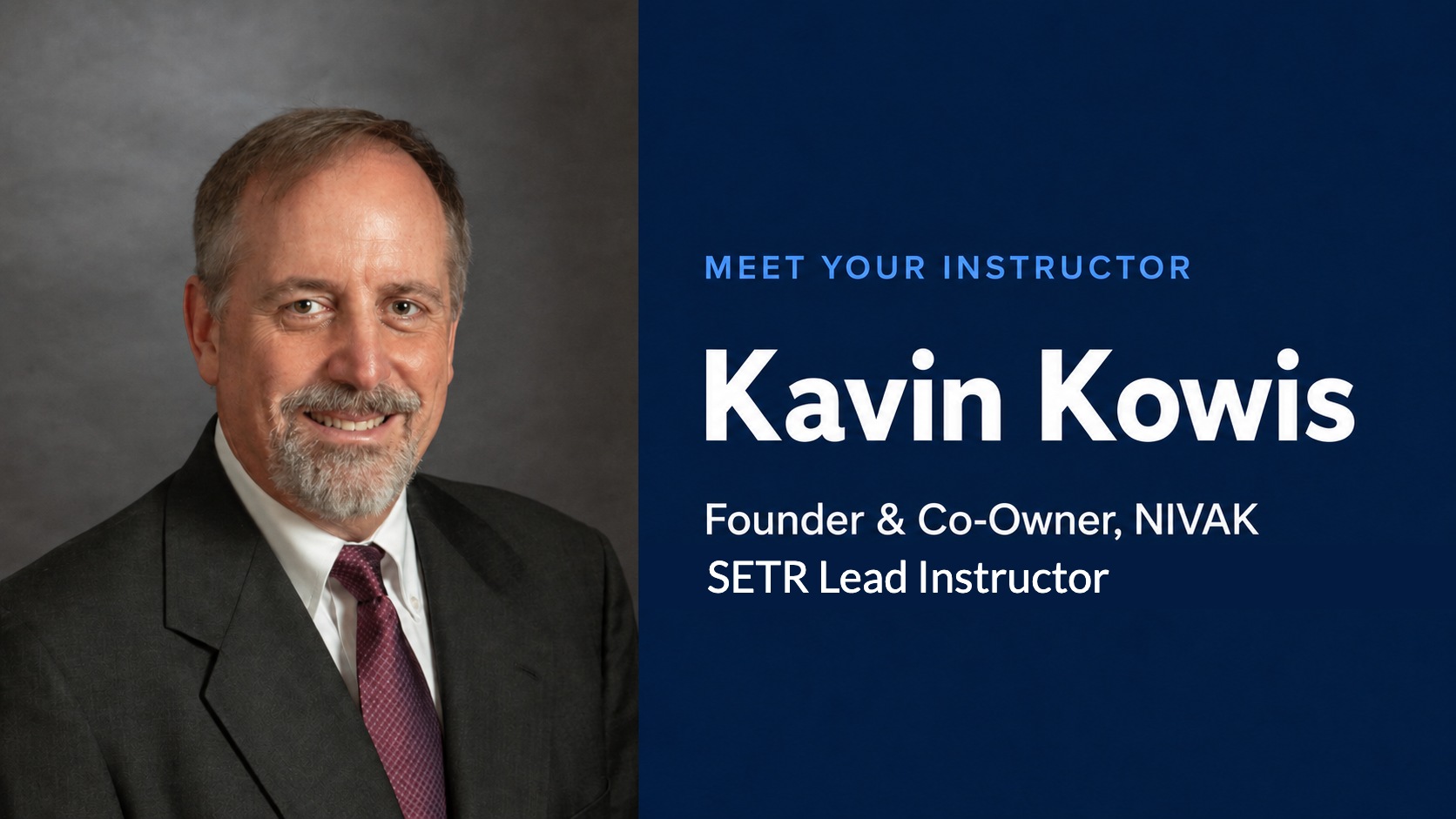
Col (Ret.) Kavin G. Kowis
Founder and Co-Owner of NIVAK and lead instructor for NIVAK Academy's acquisition series. A Navy–Marine Corps team leader with a direct view of what a review is for: bring evidence, invite independent judgment, and leave with actions someone owns.
Curriculum
-
-
(Included in full purchase)
Course Guide
-
(Included in full purchase)
Acronym Reference Guide
-
(Included in full purchase)
Lesson 1: Why SETRs Matter
-
(Included in full purchase)
Lesson 2: The Lifecycle Review Sequence
-
(Included in full purchase)
Lesson 3: Planning a SETR
-
(Included in full purchase)
Lesson 4: Roles, Independence and the TRB
-
(Included in full purchase)
Lesson 5: Findings, Actions and Closure
-
(Included in full purchase)
Lesson 6: Digital Engineering and MBSE
-
(Included in full purchase)
Lesson 7: Modernizing the NAVAIR Handbook
-
(Included in full purchase)
Reviews that inform the decision
Enroll in SETR and leave able to plan, chair, and close a technical review a program office can act on.
$295.00